<?xml version="1.0" encoding="utf-8"?>
<feed xmlns="http://www.w3.org/2005/Atom" xmlns:media="http://search.yahoo.com/mrss/">
    <title>Akalta Solutions</title>
    <link href="https://www.akalta.com/feed.xml" rel="self" />
    <link href="https://www.akalta.com" />
    <updated>2026-11-18T18:04:16+04:00</updated>
    <author>
        <name>Jordi Torné</name>
    </author>
    <id>https://www.akalta.com</id>

    <entry>
        <title>Silencing the Noise: How RSSI Filtering Keeps Tracking Accurate</title>
        <author>
            <name>Jordi Torné</name>
        </author>
        <link href="https://www.akalta.com/blog/silencing-the-noise-how-rssi-filtering-keeps-tracking-accurate/"/>
        <id>https://www.akalta.com/blog/silencing-the-noise-how-rssi-filtering-keeps-tracking-accurate/</id>
        <media:content url="https://www.akalta.com/media/posts/36/Gemini_Generated_Image_brq9isbrq9isbrq9.png" medium="image" />
            <category term="rfid"/>
            <category term="industry-4-0"/>
            <category term="bambeo"/>

        <updated>2026-06-04T13:00:00+04:00</updated>
            <summary type="html">
                <![CDATA[
                        <img src="https://www.akalta.com/media/posts/36/Gemini_Generated_Image_brq9isbrq9isbrq9.png" alt="RSSI Filtering and Signal Threshold Diagram" />
                    The bottleneck: Radio signals bleed through warehouse walls, causing location tracking systems to register assets in the wrong rooms and create phantom inventory movements. The IT solution: Deploying&hellip;
                ]]>
            </summary>
        <content type="html">
            <![CDATA[
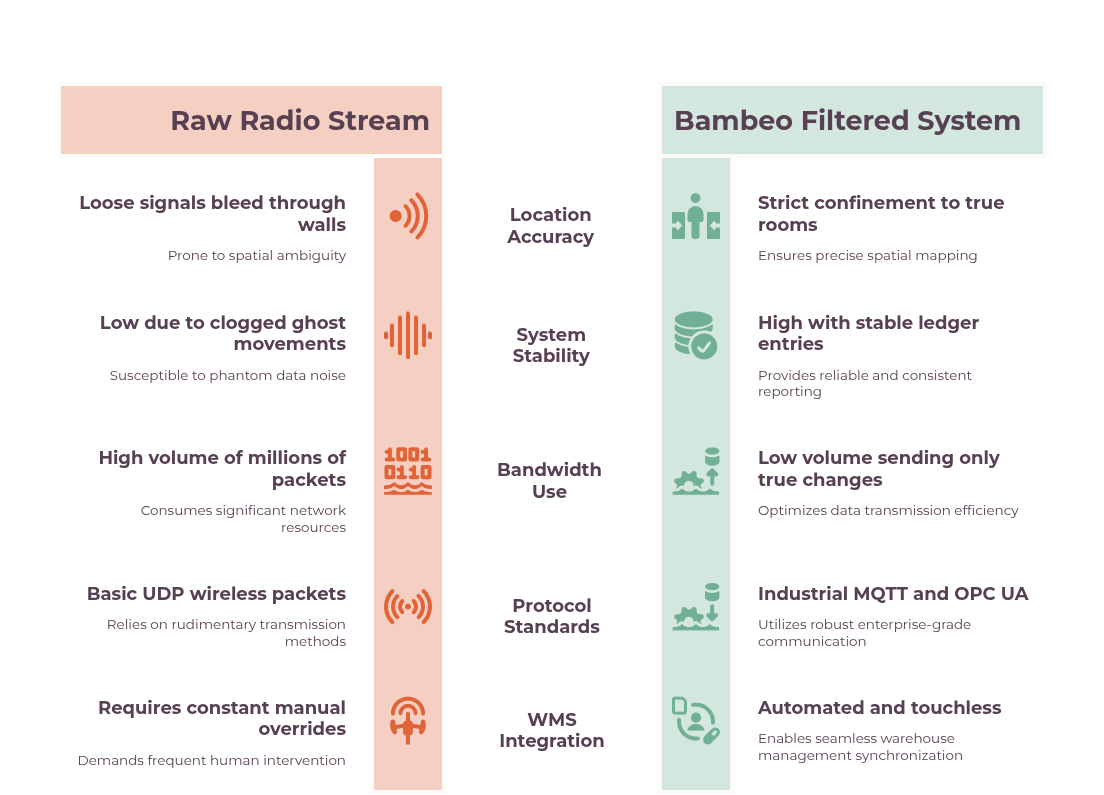
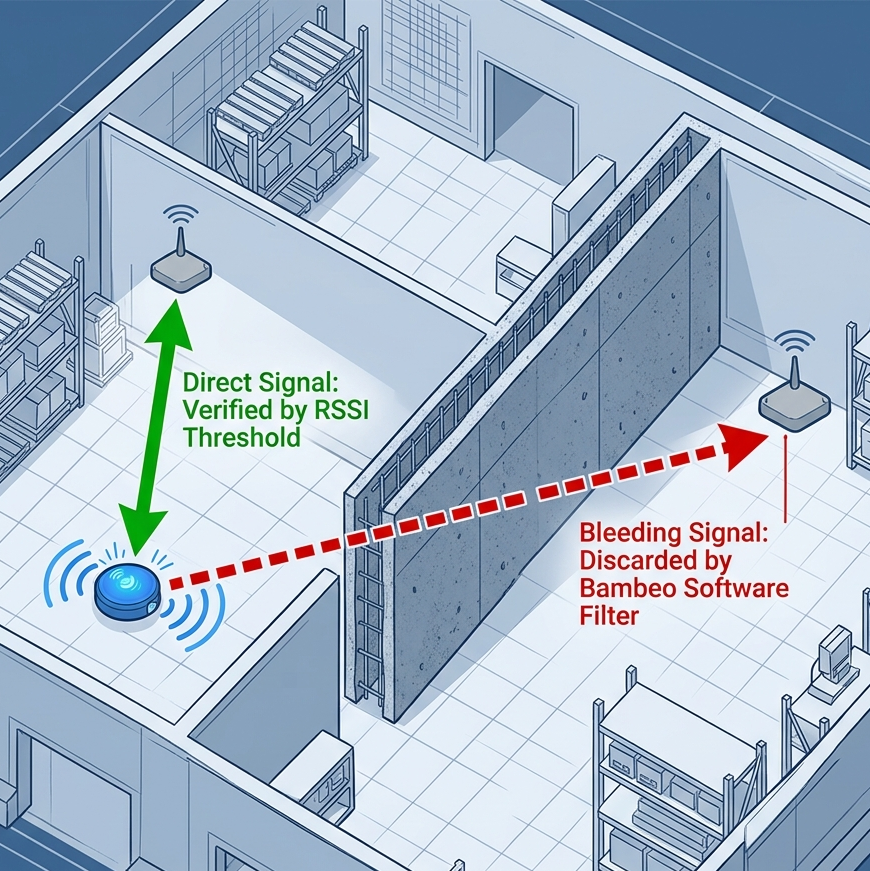
                    <p><img src="https://www.akalta.com/media/posts/36/Gemini_Generated_Image_brq9isbrq9isbrq9.png" class="type:primaryImage" alt="RSSI Filtering and Signal Threshold Diagram" /></p>
                <p><strong>The bottleneck:</strong> Radio signals bleed through warehouse walls, causing location tracking systems to register assets in the wrong rooms and create phantom inventory movements.</p><p><strong>The IT solution:</strong> Deploying Akalta’s <strong>Bambeo</strong> software platform at the network edge to filter out weak, bleeding signals using precise power thresholds.</p><p><strong>The impact on KPIs:</strong> Eliminates ghost inventory updates, maintaining an accurate floor picks-per-hour rate and preventing data corruption in enterprise systems.</p><p>Imagine looking at your warehouse management screen and seeing a critical parts pallet listed inside Shipping Bay 3. Your picker drives a forklift straight to the bay, only to find an empty concrete floor. The parts are actually sitting in the adjacent maintenance room, but the tracking signal passed right through the wall.</p><p>This tracking error is called a phantom read, which happens because radio waves do not stop at physical barriers like drywall or wood. Tracking networks use Real-Time Location Systems (RTLS) anchors mounted to ceilings to listen for battery-powered tags attached to assets. When a tag transmits, anchors in nearby rooms pick up the signal and trick your software into logging an incorrect location.</p><p>For operations managers with little technical experience, this looks like a broken tracking system. In reality, the hardware is simply catching every single radio wave in the building. Akalta developed <strong>Bambeo</strong> to fix this exact data overlap using intelligent signal filtering.</p><p>When ghost asset locations flood your Warehouse Management System (WMS) or Enterprise Resource Planning (ERP) database, floor operations slow down immediately. Workers spend 10–15 minutes tracking down missing containers that the software claims are nearby. These small delays accumulate over a standard shift, causing missed shipping windows.</p><p>In automated factories, phantom reads disrupt how Manufacturing Execution Systems (MES) route materials. An Autonomous Mobile Robot (AMR) might stop because it receives an alert that a pallet is blocking its path, even though that pallet is safely behind a wall. This false alert stops the automated vehicle and locks up the transport aisle.</p><p>To measure how these errors damage your business, operations teams track Overall Equipment Effectiveness (OEE). Tracking errors hurt the performance score because machines and workers sit idle while resolving inventory placement issues. The official formula demonstrates how these factors combine:</p><p>OEE = Availability * Performance * Quality</p><p>Bambeo stabilizes the performance metric by ensuring your automated assets move without ghost interruptions. It provides clean data directly to your core logistics platform, keeping your daily picks-per-hour rate stable.</p><p>Every tracking system measures radio signals using a metric called Received Signal Strength Indicator, or RSSI. Think of RSSI as a volume meter for radio waves. When an asset tag is right next to a ceiling receiver, the signal is loud and clear, showing a high RSSI value.</p><p>When that same signal passes through a thick concrete block wall, it loses power and grows quiet. The receiver still hears the message, but the RSSI value drops significantly. By measuring this power loss, software can determine whether an object is inside a room or just passing by outside.</p><p>Unfiltered tracking setups treat loud and quiet signals exactly the same way. This lack of discrimination fills your database with raw, confusing noise. Bambeo acts as a volume controller that automatically mutes the quiet, bleeding signals from the next room.</p><p>Bambeo sets a strict mathematical threshold for incoming radio signals. If a signal’s RSSI value falls below a specific decibel limit, the software discards the data packet instantly. Only signals that meet or exceed the power threshold pass through to your central WMS or ERP system.</p><p>This filtering process happens locally on edge gateways. Processing data at the network edge keeps your internal bandwidth free for daily manufacturing operations. The software uses industrial communication protocols like MQTT and LLRP to handle these data packets safely.</p><p>By cleaning the data stream at the edge, Bambeo prevents your central servers from slowing down during busy shipping hours. Your team sees clean, verified location data on their rugged floor tablets without any system lag. Legacy systems like older Programmable Logic Controllers (PLCs) can also read this filtered data through standard Modbus or Profinet protocols.</p><p>The difference between raw tracking data and a filtered system changes how your staff works. Without filtering, a single pallet can trigger dozens of false location updates every hour.</p><p>The following table illustrates how Bambeo transforms raw tracking data into reliable inventory records:</p><figure class="post__image"><img loading="lazy" src="/media/posts/36/silencing-noise-diagram.png" alt=""></figure><p>Accurate tracking data keeps your workplace compliant with international industrial standards. For instance, the ISO 3691-4 standard regulates how driverless industrial trucks navigate warehouse floors. If an AMR receives incorrect location data due to signal bleed, it cannot safely plan its path around workers.</p><p>Bambeo keeps vehicle coordinates precise to prevent collisions. This technical precision provides clean sensor streams that support floor safety without requiring physical guide rails. It allows safety teams to track the exact Mean Time Between Failures (MTBF) of automated pathing routes.</p><p>The platform also protects your digital operations by matching industrial cybersecurity rules. It isolates your tracking data according to IEC 62443 guidelines, separating operational technology (OT) from corporate IT networks. This network segmentation ensures that an office email virus cannot enter your factory floor tracking hardware.</p><p>For companies operating under European NIS2 data resilience guidelines, Bambeo provides edge backup features. If your primary corporate server loses its network connection, local edge gateways continue to filter and save tracking events. As soon as the connection returns, Bambeo updates your central ERP ledger without losing a single asset movement.</p>
            ]]>
        </content>
    </entry>
    <entry>
        <title>Optimizing Chain of Custody for High-Value Goods: Achieving 100% Transparency from the Laboratory to the End User</title>
        <author>
            <name>Jordi Torné</name>
        </author>
        <link href="https://www.akalta.com/blog/optimizing-the-chain-of-custody-of-high-value-goods/"/>
        <id>https://www.akalta.com/blog/optimizing-the-chain-of-custody-of-high-value-goods/</id>
        <media:content url="https://www.akalta.com/media/posts/33/continous-telemetry-on-the-go.jpg" medium="image" />
            <category term="rfid"/>
            <category term="healthcare"/>
            <category term="bambeo"/>

        <updated>2026-05-19T13:00:00+04:00</updated>
            <summary type="html">
                <![CDATA[
                        <img src="https://www.akalta.com/media/posts/33/continous-telemetry-on-the-go.jpg" alt="" />
                    Operational Impact The Bottleneck: High-value laboratory therapies, specialized cell cultures, and rare chemical agents disappear or degrade during internal transport, forcing complete batch re-manufacture. The IT Solution: Deploying&hellip;
                ]]>
            </summary>
        <content type="html">
            <![CDATA[
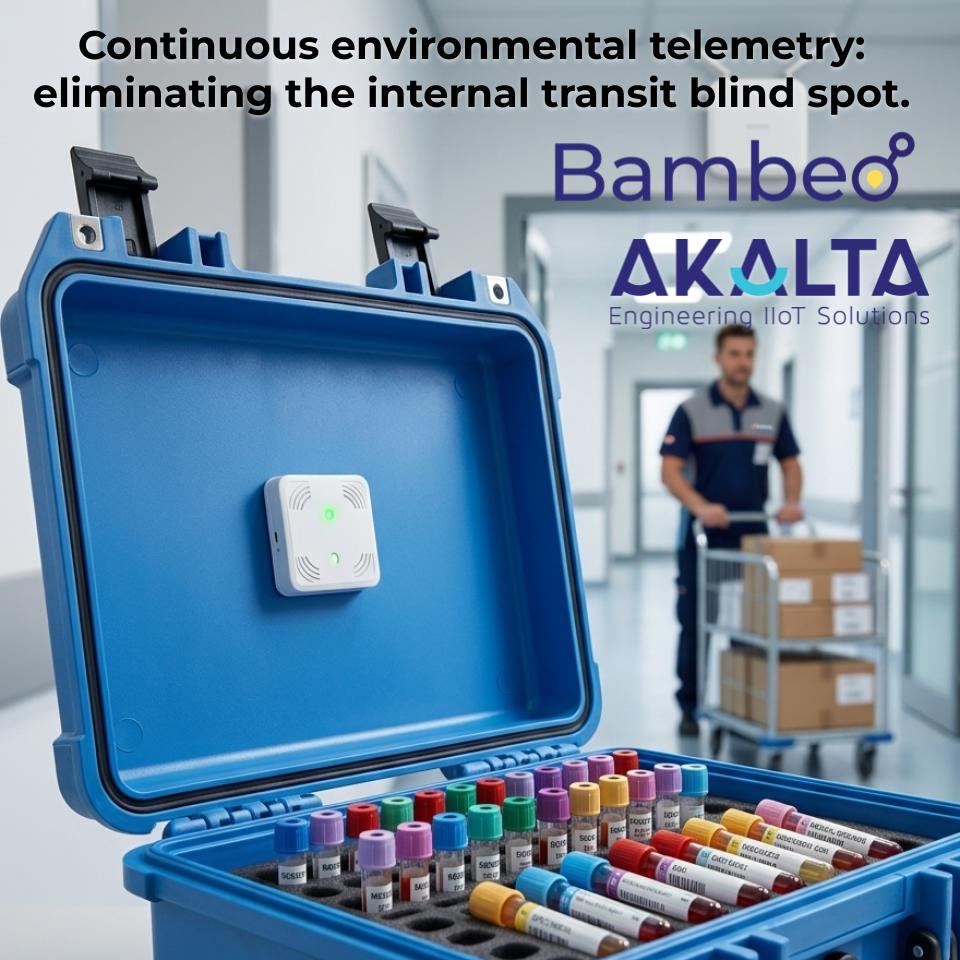
                    <p><img src="https://www.akalta.com/media/posts/33/continous-telemetry-on-the-go.jpg" class="type:primaryImage" alt="" /></p>
                <h2 id="operational-impact">Operational Impact</h2>
<ul>
<li>The Bottleneck: High-value laboratory therapies, specialized cell cultures, and rare chemical agents disappear or degrade during internal transport, forcing complete batch re-manufacture.</li>
<li>The IT Solution: Deploying Akalta’s <a href="../..//bambeo/">Bambeo</a> tracking system using wireless sensor tags and gateway nodes to log ambient conditions and physical coordinates continuously.</li>
<li>The Impact on KPIs: Reduces missing asset rates to 0%, cuts compliance audit prep time from 5 days to 0, and protects 100% of batch yield metrics.</li>
</ul>
<h2 id="eliminating-blind-spots-in-internal-specimen-transit">Eliminating Blind Spots in Internal Specimen Transit</h2>
<p>Hospitals, production plants, and laboratories move thousands of custom therapies, expensive reagents, and biopsy batches daily. The standard protocol relies on a technician signing a paper ledger or scanning a passive barcode at the origin and destination points. This approach leaves a complete visibility gap during the physical transit window between buildings or specialized floors.</p><p>If a specimen box sits on a loading dock or inside an uncooled elevator for three hours, the paper ledger remains unchanged until the item is scanned at the final room. The clinical team only discovers the thermal degradation or physical loss after unpacking the shipment. Such failures delay patient treatment tracks and ruin irreplaceable research materials.</p><p>Traditional logistics networks treat internal distribution as an unmonitored zone. The organization assumes that because an asset is inside the perimeter, it is safe. Real-world operational audits show that internal transit is where most handling errors occur.</p><p>A single ruined batch of personalized oncology treatment can cost upwards of €20,000 to replace. Beyond the direct financial hit, the facility suffers reputational damage when scheduled patient procedures must be canceled. Deploying passive tracking infrastructure mitigates these operational liabilities by providing continuous visibility.</p><h2 id="tracking-physical-continuity-via-wireless-sensor-meshes">Tracking Physical Continuity via Wireless Sensor Meshes</h2>
<p>To protect asset integrity, facilities use active tracking systems that capture data continuously during transit. This framework changes tracking from a historical record to a continuous stream of operational telemetry. Small sensor tags attach directly to high-value transport cases or individual specimen containers.</p><p>These tags measure environmental metrics like temperature and vibration while broadcasting an identity signal every second. Fixed receiver nodes, mounted above doorways and specialized collection areas, capture these data streams as the package moves. The network maps the location and physical state of the asset without requiring a technician to pause and perform a manual action.</p><p>The sensor mesh operates completely independently of the hospital or warehouse corporate Wi-Fi network. This isolation preserves network bandwidth for clinical machines and protects the tracking data from local signal interference. Operational teams receive a steady flow of spatial and environmental metrics throughout the journey.</p><p>The tracking hardware consists of miniature Bluetooth or ultra-wideband tags engineered for sterile environments. These casings withstand industrial sanitization protocols and ultra-low temperature freezers down to –80°C. The anchors pick up these frequencies through walls and storage doors, maintaining data flow across structural barriers.</p><h2 id="automating-handover-logs-through-bambeo">Automating Handover Logs through Bambeo</h2>
<p>Akalta’s Bambeo platform transforms raw sensor signals into a tamper-proof digital chain of custody. The software tracks the asset’s path on a live dashboard, validating every stage against the scheduled delivery plan. If a courier departs Lab 2A, Bambeo registers the departure automatically when the tag passes the door frame.</p><p>The platform assigns accountability by linking the asset’s position to the nearest authorized worker badge. When an asset moves along a corridor, Bambeo logs both the item’s tag and the courier’s badge simultaneously. This dual-tracking logic provides indisputable proof of physical possession at every moment of the trip.</p><p>The software matches the data from the floor anchors with active work schedules in the warehouse management system. When an item enters a new ward, the platform automatically logs the transfer of operational responsibility. This removes the necessity for manual check-ins, allowing clinical staff to prioritize medical care over logistical data entry.</p><p>If a package is left unattended in an unauthorized zone, the platform triggers an automated notification. The system sends an immediate alert to the shift supervisor before the material suffers structural or thermal damage. This active intervention system stops losses before they impact the facility’s bottom line.</p><h2 id="comparing-verification-systems-for-high-value-goods">Comparing Verification Systems for High-Value Goods</h2>
<p>The following technical breakdown highlights the operational shift from intermittent barcode checkpoints to active monitoring data:</p><h2 id="meeting-european-data-sovereignty-and-infrastructure-rules">Meeting European Data Sovereignty and Infrastructure Rules</h2>
<p>Operating a tracking system inside European research and health centers means meeting strict regulatory baselines. Bambeo handles all spatial data locally to comply with GDPR data minimization principles. The software does not record personal profile details, focusing purely on identifying asset positions and assigning worker badges by alphanumeric codes.</p><p>Because these networks operate as part of critical health and supply infrastructures, they fall under the NIS2 Directive. Bambeo meets these data resilience standards by using local gateways that store data during network disconnects. This edge-caching design guarantees that the chain of custody remains unbroken even during corporate network failures.</p><p>The resulting digital record provides a complete audit trail that complies with international manufacturing standards. Regulatory inspectors can verify storage temperatures and custody handovers on a single interface. Hospitals and research facilities eliminate manual ledger reconciliation work entirely.</p><h2 id="securing-delivery-to-the-ultimate-recipient">Securing Delivery to the Ultimate Recipient</h2>
<p>The chain of custody does not terminate when an item reaches the facility’s shipping dock. Bambeo extends its visibility to the final handover point by syncing edge-tag data with mobile delivery applications. When the high-value asset leaves the building for courier transit, the system continues to compile its history.</p><p>The recipient receives a secure link showing the verified lifecycle of the product from the original laboratory workbench. This transparency proves that the item remained within safe thermal boundaries throughout its life. Providing this objective validation increases trust between manufacturing laboratories and end users.</p><p>Eliminating paper ledgers protects high-value pipelines from structural loss and operational errors. By substituting manual handovers with automated data layers, organizations ensure every critical item arrives safely.</p>
            ]]>
        </content>
    </entry>
    <entry>
        <title>The Cost of Lost Hours: Bringing Order to the Modern Research Lab</title>
        <author>
            <name>Jordi Torné</name>
        </author>
        <link href="https://www.akalta.com/blog/bringing-order-to-the-modern-lab/"/>
        <id>https://www.akalta.com/blog/bringing-order-to-the-modern-lab/</id>
        <media:content url="https://www.akalta.com/media/posts/25/bringing-order-to-labs.jpg" medium="image" />
            <category term="healthcare"/>
            <category term="bambeo"/>

        <updated>2026-05-12T13:00:00+04:00</updated>
            <summary type="html">
                <![CDATA[
                        <img src="https://www.akalta.com/media/posts/25/bringing-order-to-labs.jpg" alt="" />
                    A research chemist stands in front of an ultra-low temperature freezer at 9:00 AM. She needs a specific enzyme vial to begin an experiment that takes seven hours&hellip;
                ]]>
            </summary>
        <content type="html">
            <![CDATA[
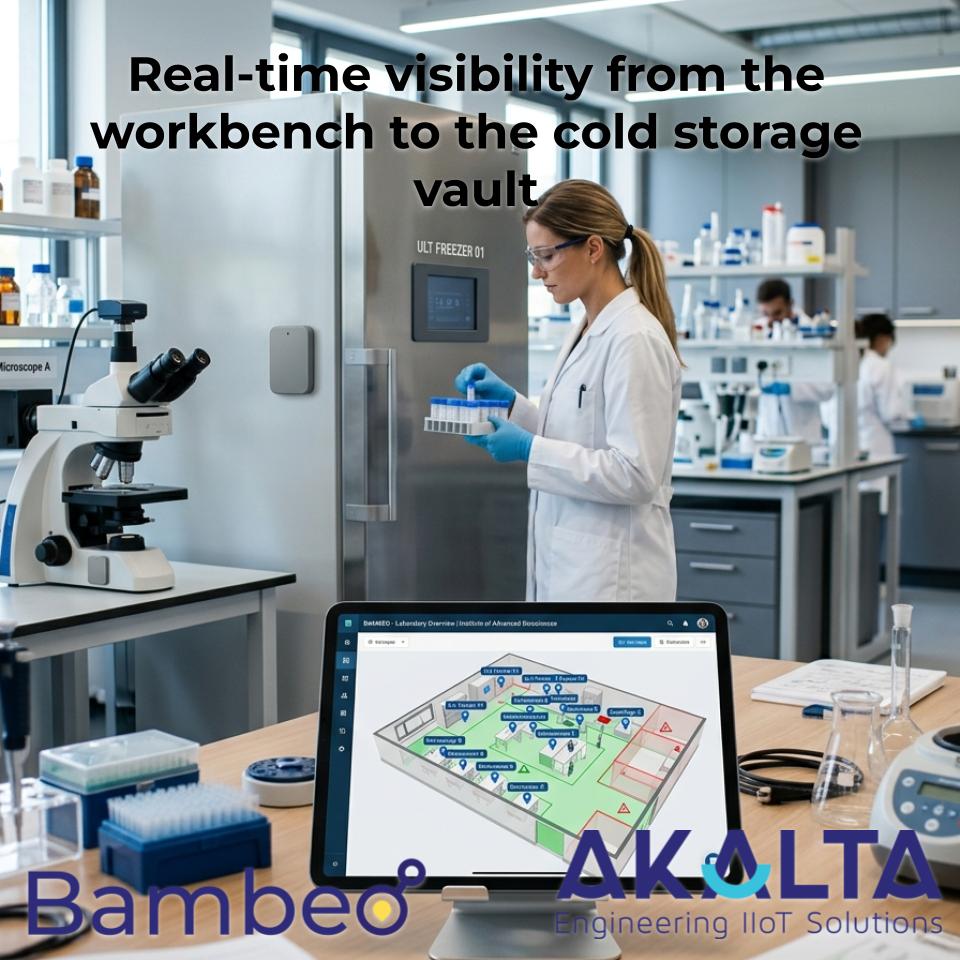
                    <p><img src="https://www.akalta.com/media/posts/25/bringing-order-to-labs.jpg" class="type:primaryImage" alt="" /></p>
                <p>A research chemist stands in front of an ultra-low temperature freezer at 9:00 AM. She needs a specific enzyme vial to begin an experiment that takes seven hours to complete. If she starts by 9:30 AM, she can finish before her shift ends. She opens the freezer, searches through four frozen racks, and finds the box empty.</p><p>The logbook attached to the freezer door says there are six vials left. Someone used the last of the supply yesterday but forgot to cross it off the paper list. The chemist now faces a choice: abandon the day’s work entirely or spend the next two hours walking down hallways, knocking on doors, and asking other departments if they have a spare vial to loan her.</p><p>This scenario plays out daily in scientific facilities worldwide. Research institutes and laboratory environments operate under strict constraints. They are places where tracking high-value equipment, managing specialized consumables, keeping up with regulations, and maintaining safety are constant, demanding priorities. When these systems rely on manual data entry, paper logs, or memory, the result is wasted funding, delayed discoveries, and administrative friction.</p><p>Scientific environments handle thousands of unique samples, highly volatile chemicals, and instrumentation that costs more than a suburban home. To keep these operations moving forward, managers are turning away from manual clipboards and adopting automated systems that allow the lab to track itself.</p><h2 id="tracking-the-small-materials-that-keep-labs-running">Tracking the Small Materials That Keep Labs Running</h2>
<p>A typical life sciences laboratory stocks thousands of distinct items, ranging from everyday plastic pipette tips to rare chemical reagents that cost thousands of dollars per ounce. Keeping an accurate tally of this inventory by hand is nearly impossible. Busy researchers prioritize their experiments over inventory bookkeeping, meaning stock shortages are often discovered only when a shelf is completely bare.</p><p>The <a href="../..//bambeo/">Bambeo</a> platform addresses this by assigning unique digital identities to every individual item or sample container within a facility. Instead of counting boxes on a shelf at the end of the week, the facility uses automated digital logging.——————-+</p><p>Managers can establish specific geographic zones within the software, such as a specialized chemical refrigerator or a hazardous material storage bunker. The system monitors the quantity of items inside these specific spaces. If the volume of a vital reagent drops below a set limit, the system triggers an automatic alert. This notification goes directly to the purchasing manager, allowing them to reorder the material before a laboratory technician arrives at an empty shelf and experiences project downtime.</p><p>This constant monitoring also provides accurate summaries of how quickly materials are used. By looking at historical consumption trends, facility directors can pinpoint exactly when specific items are depleted. This data removes the guesswork from supply replenishment, preventing labs from over-ordering expensive materials that might expire on the shelf before they are ever used. It keeps budgets lean and closely tied to actual experimental needs.</p><h2 id="managing-shared-instruments-without-the-conflict">Managing Shared Instruments Without the Conflict</h2>
<p>Most modern research institutes operate on a shared resource model. Because specialized instrumentation—like mass spectrometers, flow cytometers, or high-powered microscopes—is too expensive for every individual team to own, these tools sit in central rooms used by dozens of different research groups.</p><p>This setup creates two major logistical problems: scheduling conflicts and missing tools.</p><p>Bambeo resolves scheduling friction through an integrated reservation system. Researchers use the platform to book specific time slots for the instruments they need. When a scientist checks an instrument in or out, the system updates its active status for the entire facility. This visibility prevents two teams from showing up at the same microscope with live, time-sensitive samples only to find the machine occupied.</p><p>The second issue involves mobile equipment. Items like handheld spectrometers, specialized electronic pipettes, or expensive calibration toolsets frequently migrate out of the central lab and into individual private offices or remote testing bays. When the next user needs the tool, it is gone.</p><p>To eliminate the hours spent searching for missing assets, laboratories install small electronic readers—using technologies like radio frequency identification (RFID), barcodes, or near-field communication (NFC)—at doorways and across specific work areas. These readers scan tags attached to the equipment as it moves through the building. If a technician needs a specific portable meter, they look at the Bambeo dashboard to see exactly which room or work block the item occupies right now.</p><p>Beyond location tracking, delicate laboratory instruments require systematic maintenance to ensure their readings stay accurate. A scale or laser that drifts out of calibration can invalidate months of experimental data. The platform supports automated work orders triggered by usage milestones or set time intervals. The software tracks how many hours a machine has run or how many weeks have passed since its last service, automatically generating alerts for cleaning, sterilization, or calibration procedures.</p><h2 id="automating-the-steps-of-the-lab-bench-pipeline">Automating the Steps of the Lab Bench Pipeline</h2>
<p>Experimental protocols are precise recipes. A single sample might need to undergo a dozen separate steps over several weeks, passing through different rooms, temperatures, and chemical treatments. Manually recording the completion of each step in a paper logbook introduces human error and slows down the pipeline.</p><p>Bambeo allows facility directors to predefine structured process patterns within the software based on specific asset types and tracking zones.</p><p>When a tray of blood samples or a rack of culture plates passes through localized scanning gateways, such as an RFID tunnel built into a lab doorway, the system detects the movement automatically. It identifies the batch, verifies its position against the intended experimental pipeline, and logs the milestone instantly without requiring a scientist to put down their tools to type on a keyboard.</p><p>This automated workflow monitoring also acts as a quality control mechanism. Sensitive procedures must be performed exclusively by qualified personnel. Within the platform, specialized operational tasks can be locked to specific worker profiles based on their designated roles and technical skills. If an employee who lacks the proper certification attempts to log into a high-risk system or move an asset into a specialized test area, the system flags the variance, protecting the facility from compromised results and safety liabilities.</p><h2 id="safety-boundaries-and-regulatory-compliance">Safety Boundaries and Regulatory Compliance</h2>
<p>Maintaining strict biosafety levels or protecting proprietary corporate research requires tight control over physical movement. Bambeo uses digital boundaries known as geofences to monitor access to sensitive areas.</p><p>The software allows managers to set explicit rules—like “grant,” “reject,” or “notice”—for individual rooms or entire wings of a building. If a worker enters a zone that contains hazardous pathogens or radiation risks without the proper authorization, the platform logs the movement violation instantly and alerts safety officers.</p><p>To make everyday safety compliance easier for the staff, documentation like Safety Data Sheets, equipment operational manuals, and regulatory compliance records can be attached directly to the digital profiles of assets and rooms. Instead of hunting through filing cabinets for a chemical spill protocol, a technician can scan the barcode on the storage cabinet with a mobile device to read the safety guide immediately.</p><h2 id="maintaining-separation-in-shared-spaces">Maintaining Separation in Shared Spaces</h2>
<p>When multiple independent research groups share a single facility or incubator building, data privacy becomes an operational hurdle. Teams want to use the same tracking infrastructure, but they cannot allow competing groups to see their proprietary samples, supply levels, or project timelines.</p><p>Bambeo solves this through strict data isolation built around distinct accounts and separate cost centers. The platform limits data visibility so that independent research teams see only the inventory, schedules, and locations relevant to their specific department. The physical hardware is shared, but the digital workspaces remain completely private.</p><p>This automated logging creates a detailed, chronological record of every asset state change, physical movement, and process milestone within the lab. When an official regulatory audit occurs, facility managers do not have to spend days collecting messy paper logbooks or trying to reconstruct past events from memory.</p><p>The platform provides an explicit, permanent audit trail that proves compliance with quality standards, environmental safety rules, and privacy mandates. Furthermore, it connects directly into existing laboratory systems using standard data tools like a REST API, MQTT interfaces, or custom webhooks. This connection allows data to flow directly between Bambeo and existing Laboratory Information Management Systems or institutional software platforms.</p><p>By replacing manual tracking with passive, automated data collection, laboratories eliminate the hidden delays that slow down scientific discovery. The technology stays in the background, allowing researchers to spend less time managing inventory and more time focusing on their data.</p>
            ]]>
        </content>
    </entry>
    <entry>
        <title>The Invisible Threat inside the Wood Box</title>
        <author>
            <name>Jordi Torné</name>
        </author>
        <link href="https://www.akalta.com/blog/the-invisible-threat-inside-the-wood-box/"/>
        <id>https://www.akalta.com/blog/the-invisible-threat-inside-the-wood-box/</id>
        <media:content url="https://www.akalta.com/media/posts/19/invisible-thread-box.jpg" medium="image" />
            <category term="rfid"/>
            <category term="predictive-maintenance"/>
            <category term="bambeo"/>

        <updated>2026-05-04T13:00:00+04:00</updated>
            <summary type="html">
                <![CDATA[
                        <img src="https://www.akalta.com/media/posts/19/invisible-thread-box.jpg" alt="" />
                    A heavy shipping crate sits on the tarmac at an international airport in July. Inside, packed in layers of custom-cut foam, is an oil-on-wood portrait painted in 1640.
                ]]>
            </summary>
        <content type="html">
            <![CDATA[
                    <p><img src="https://www.akalta.com/media/posts/19/invisible-thread-box.jpg" class="type:primaryImage" alt="" /></p>
                <p>A heavy shipping crate sits on the tarmac at an international airport in July. Inside, packed in layers of custom-cut foam, is an oil-on-wood portrait painted in 1640. The temperature on the asphalt is 95°F (35°C). The air conditioning in the airport’s cargo holding area has broken down, and the flight is delayed by three hours.</p><p>Nobody on the ground notices the danger. To the logistics company handling the flight, this crate is just a barcode on a digital manifest. It scanned “on time” at the warehouse, and it will scan “on time” when it loads onto the plane. Everything looks perfect on paper.</p><p>Inside the sealed wood box, however, a quiet disaster is unfolding. The ancient oak panel supporting the paint is sensitive to heat and dry air. As the temperature rises, the moisture trapped inside the wood begins to evaporate. The wood fibers shrink and warp. The oil paint on top, brittle with age, cannot stretch to match the movement of the wood. Microscopic fractures begin to spread across the face of the portrait.</p><p>By the time the crate reaches its destination gallery across the ocean, the damage is done. The museum staff opens the box, shines a flashlight across the surface, and finds tiny flakes of paint sitting at the bottom of the frame.</p><p>This is the reality of the high-value art supply chain. When a museum loans a masterpiece to an international exhibition, the greatest risk is rarely a spectacular art heist. The real enemy is the environment. Canvas, parchment, wood panels, and old varnishes are living, organic materials. They react continuously to the air around them. Moving these objects across continents means exposing them to sudden shifts in moisture, rough handling by airport baggage staff, and structural strain.</p><p>Traditional tracking systems are blind to these threats. They tell you where an object is, but they tell you nothing about how it is feeling.</p><h3 id="the-limits-of-post-mortem-data">The Limits of Post-Mortem Data</h3>
<p>For decades, the standard way to protect art in transit was to look at the data after the journey ended.</p><p>Museums would place a small device called a “data logger” inside the shipping container. This device recorded the temperature and humidity every fifteen minutes throughout the trip. When the crate finally arrived at the destination gallery, a conservation specialist would unscrew the lid, plug the logger into a laptop, and download the report.</p><p>If the report showed a massive spike in humidity or a violent drop in temperature, the curators would know exactly when the environment failed. But that information is a post-mortem. It tells you how the art was damaged, but it does nothing to prevent the damage from happening in the first place. You cannot save a 400-year-old drawing by reading a graph about why it ruined two days ago while sitting in a damp customs warehouse.</p><p>Furthermore, these loggers do not solve the problem of physical shock. If a delivery truck hits a massive pothole at fifty miles per hour, the sudden impact can crack a fragile marble sculpture or loosen a canvas from its stretcher bars. A standard logger simply records that an impact occurred. It does not alert anyone to check the structural integrity of the object before it travels another three hundred miles on a bumpy road.</p><p>To truly protect irreplaceable cultural artifacts, we must shift from recording history to seeing it happen in real time.</p><h3 id="the-mechanics-of-condition-monitoring">The Mechanics of Condition Monitoring</h3>
<p>Modern tracking relies on small, low-power electronic tags that act as eyes and ears inside the shipping crate. These devices are about the size of a smartphone and can run for months on a small internal battery. They do not require any wiring into a vehicle’s power system, allowing them to remain completely self-contained inside the packing materials.</p><p>Instead of just checking a location using GPS satellites, these tags contain a collection of specialized digital instruments:</p><ul>
<li>Hygrometers: These measure relative humidity, tracking the amount of moisture in the air inside the box.</li>
<li>Thermometers: These monitor temperature fluctuations down to a fraction of a degree.</li>
<li>Accelerometers: These measure g-force and impact, recording every bump, drop, or sudden vibration.</li>
<li>Gyroscopes: These track orientation, immediately revealing if a crate that must stay upright has been laid flat or turned upside down.</li>
</ul>
<p>These instruments gather data continuously. However, sending this data out of a sealed box wrapped in foam and stowed in the metal hull of an airplane is a significant engineering challenge. Standard Wi-Fi and Bluetooth signals cannot easily penetrate these layers.</p><p>Modern IoT systems solve this by using multiple paths to transmit information. When the crate is traveling on a highway, the tag uses cellular networks to broadcast its status. When it is deep inside an airport warehouse or a cargo ship where cellular signals fail, the tag can use low-frequency radio networks or satellite links to maintain a connection to the outside world.</p><h3 id="how-bambeo-gives-sight-to-the-crate">How Bambeo Gives Sight to the Crate</h3>
<p>Raw sensor data is useless to a museum director or a gallery registrar who is not a computer technician. They do not have the time to read raw strings of coordinates or frequency graphs. They need immediate, actionable clarity.</p><p>Akalta’s <a href="../..//bambeo/">Bambeo</a> platform is the translation engine that connects the physical crate to the museum’s desktop or tablet screen. It takes the stream of digital measurements from the transit tags and converts them into a clean, interactive 3D map.</p><p>When a museum logs into Bambeo, they do not just see a list of tracking numbers. They see their entire traveling collection displayed across a global dashboard. Every shipment is marked with a simple status indicator. If all environmental conditions are within safe parameters, the shipment icon remains green.</p><p>The system operates on custom rules created by the museum’s conservation team. For example, a curator packing a delicate medieval manuscript can tell Bambeo that the humidity inside that specific box must never drop below 45% or rise above 55%.</p><p>If the crate is left on a cold loading dock in Chicago and the humidity begins to drift outside those tight boundaries, Bambeo acts immediately. It changes the asset icon to red and sends an automated alert via text message and email to the logistics coordinator. The alert states the exact problem: Crate 12A – Temp 42°F – Humidity 38% – Location: Sector 4 Cargo Terminal.</p><p>The coordinator does not have to wonder what to do. They can call the local handling agent at the terminal immediately, giving them specific instructions to move that exact box into a climate-controlled room before the parchment begins to warp.</p><p>+————————————————————+</p><p>| BAMBEO LIVE MONITORING - ASSET 12A                         |</p><p>+————————————————————+</p><p>| Status: ALERT (RED)                                        |</p><p>| Current Temp: 42°F (5.5°C)  | Target: 65°F - 72°F          |</p><p>| Current Humidity: 38%       | Target: 45% - 55%            |</p><p>| Last Shock: 1.2G (Safe)     | Orientation: Upright         |</p><p>+————————————————————+</p><p>| Action: Contact local carrier at Sector 4 Cargo Terminal.  |</p><p>+————————————————————+</p><h3 id="preventing-the-impact-of-rough-handling">Preventing the Impact of Rough Handling</h3>
<p>Physical shock is the second major hazard of the museum supply chain. When crates are transferred between trucks, planes, and forklifts, they are vulnerable to drops and improper orientation.</p><p>Bambeo monitors these events using instantaneous impact detection. If a forklift operator drops a crate containing an ancient Greek ceramic vase, the sensor registers the exact g-force of the impact. If that force exceeds the safety threshold designed for fragile pottery, Bambeo flags the event.</p><p>This immediate notification changes how museums handle quality control. Instead of discovering a cracked vase at the end of a multi-week tour, the museum knows about the impact within seconds of it happening. They can instruct the transport team to halt the shipment at the next secure location for an intermediate inspection. This prevents a compromised object from suffering further damage from the normal vibrations of the remaining journey.</p><p>The system also tracks tilt. Many large oil paintings must be shipped vertically to prevent the heavy layers of paint from sagging or separating from the canvas under the weight of gravity. If a transport worker lays the crate flat to save space in a delivery van, Bambeo alerts the manager immediately, allowing them to correct the orientation before the canvas stretches permanently.</p><h3 id="building-a-safer-path-for-history">Building a Safer Path for History</h3>
<p>The benefits of using Bambeo extend beyond managing individual emergencies. Every trip made by a traveling exhibition generates a complete historical record of environmental data.</p><p>Over time, this data reveals patterns that help museums choose better logistics partners and safer transit routes. A registrar reviewing past shipments in Bambeo might notice that flights passing through a specific transfer hub consistently experience longer delays on hot tarmacs, or that a particular trucking company has a history of higher vibration levels on certain highway routes.</p><p>With this knowledge, museums can design safer itineraries for future loans. They can require carriers to update their suspension systems or choose routes that avoid poorly maintained infrastructure. This shifts the entire industry away from relying on insurance policies to cover losses, moving instead toward a system where damage is actively avoided.</p><h3 id="simple-control-for-complex-collections">Simple Control for Complex Collections</h3>
<p>The true value of an IoT solution like Bambeo is that it hides the complexity of the technology from the people who need to use it. Museum staff do not need to manage radio towers, configure cellular roaming, or interpret data streams.</p><p>The tags are placed inside the crates during the standard packing process. Once the lid is fastened, the system runs automatically in the background. The software presents the data through a clean, intuitive map interface that matches the natural workflow of a gallery registrar.</p><p>Fine art represents our shared cultural memory. Protecting it requires more than heavy boxes and sturdy locks; it requires constant, vigilant sight. By turning silent crates into intelligent, communicative assets, Bambeo ensures that the treasures of the past survive their journeys into the future intact.</p>
            ]]>
        </content>
    </entry>
    <entry>
        <title>The Empty Lot: A Sunday Morning Reality</title>
        <author>
            <name>Jordi Torné</name>
        </author>
        <link href="https://www.akalta.com/blog/the-invisible-tag-and-the-shrinkage-of-assets/"/>
        <id>https://www.akalta.com/blog/the-invisible-tag-and-the-shrinkage-of-assets/</id>
        <media:content url="https://www.akalta.com/media/posts/40/the-silent-vigilant.png" medium="image" />
            <category term="rfid"/>
            <category term="bambeo"/>

        <updated>2026-04-07T13:00:00+04:00</updated>
            <summary type="html">
                <![CDATA[
                        <img src="https://www.akalta.com/media/posts/40/the-silent-vigilant.png" alt="" />
                    A construction site on a Sunday morning is a place of absolute silence. No hammers, no diesel engines, no shouting. But for a project manager arriving early to&hellip;
                ]]>
            </summary>
        <content type="html">
            <![CDATA[
                    <p><img src="https://www.akalta.com/media/posts/40/the-silent-vigilant.png" class="type:primaryImage" alt="" /></p>
                <p>A construction site on a Sunday morning is a place of absolute silence. No hammers, no diesel engines, no shouting. But for a project manager arriving early to prep for the Monday shift, that silence can be broken by a single, gut-wrenching sight: a space on the gravel where a $150,000 backhoe sat forty-eight hours ago.</p><p>There are no broken fences. The heavy-duty chains on the gate are still intact. The machine didn’t sprout wings. It was simply walked onto a flatbed trailer in the middle of the night by someone who knew exactly how to bypass a standard ignition lock.</p><p>This isn’t a rare occurrence. The construction industry loses between $300 million and $1 billion every year to equipment theft. “Shrinkage” is the polite term used in boardrooms to describe the steady disappearance of assets. On the ground, it means delayed projects, skyrocketing insurance premiums, and the sheer frustration of knowing that your tools are likely on a container ship or in another state before you’ve even finished your first cup of coffee.</p><p>Traditional security — fences, locks, and the occasional night watchman — is failing. We are entering the era of Anti-Theft 2.0. This isn’t about bigger padlocks. It’s about using invisible digital threads to tie your most expensive equipment to the site.</p><h3 id="the-evolution-of-the-search">The Evolution of the “Search”</h3>
<p>In the past, if a machine was stolen, you called the police and hoped they stumbled upon it during a routine stop. Then came the first generation of GPS trackers. These were a step forward, but they had three major flaws. They were large and easy for a thief to spot and rip out. They required a lot of power, meaning they had to be wired into the machine’s battery. Finally, they were expensive. You might protect your massive cranes, but you wouldn’t bother with a $5,000 generator or a specialized welding unit.</p><p>Modern IoT (Internet of Things) technology has changed the math. We now use “tags” that are smaller than a deck of cards. These devices are rugged, waterproof, and can run for five to seven years on a single internal battery. Because they don’t need to be wired into the vehicle’s electrical system, they can be hidden anywhere — inside a seat cushion, behind a light housing, or deep within the engine block.</p><p>A thief can’t disable what they can’t find.</p><p>These tags don’t just sit there. They talk. They use a variety of signals to tell a central system exactly where they are. Some use satellites, others use cellular networks, and many use low-power radio waves that can travel miles while barely sipping battery power.</p><h3 id="understanding-the-invisible-fence">Understanding the “Invisible Fence”</h3>
<p>The most powerful tool in the Anti-Theft 2.0 toolkit is geofencing.</p><p>Think of a geofence as an invisible, digital boundary you draw on a map around your job site. On Saturday at 6:00 PM, the site manager “arms” the fence. If any tagged piece of equipment crosses that digital line, the system doesn’t just record it — it screams.</p><p>Within seconds, the manager receives a text message and an automated call. The system provides a live, moving dot on a map. You aren’t finding out your equipment is gone on Monday morning. You’re finding out at 2:15 AM on Sunday, while the thief is still only three blocks away.</p><p>This shift from “recovery” to “real-time intervention” is what changes the outcome. When the police are called with a live GPS coordinate and a description of the vehicle, the recovery rate jumps from less than 10% to nearly 90%.</p><h3 id="enter-bambeo-the-brain-of-the-operation">Enter Bambeo: The Brain of the Operation</h3>
<p>A tag on a machine is just hardware. Without a way to see and manage that information, it’s just a silent plastic box. This is where Akalta’s <a href="../..//bambeo/">Bambeo</a> platform comes in.</p><p>Bambeo is the software interface that turns raw data into a usable tool for people who aren’t tech experts. You don’t need to understand radio frequencies or satellite handshakes. When you log into the dashboard, you see your job site. Every generator, excavator, and skid steer is a clear icon on a high-resolution map.</p><p>Here is how Bambeo changes the daily workflow:</p><ul>
<li>Custom Alert Logic: You can set the system to ignore movement during work hours (7:00 AM – 5:00 PM) but trigger an immediate alarm if a machine moves ten feet during the night.</li>
<li>The “Breadcrumb” Trail: If a piece of equipment is stolen, Bambeo shows the exact route it took. This is vital evidence for law enforcement and insurance providers.</li>
<li>Battery Management: The system monitors the “health” of every tag. It tells you six months in advance when a tag in a hidden location will need a battery swap.</li>
<li>Multi-Site Oversight: If you are a company managing ten different projects across three states, you can see every single asset on one screen. You no longer have to call site foremen to ask, “Do we still have that specialized drill in Austin?” You just look at the map.</li>
</ul>
<h3 id="beyond-theft-the-hidden-roi">Beyond Theft: The Hidden ROI</h3>
<p>While the primary goal of Anti-Theft 2.0 is stopping criminals, the data provided by Bambeo offers a secondary, often larger, financial benefit. We call this “Utilization Tracking.”</p><p>On a typical large-scale project, equipment often sits idle. A subcontractor might request a skid steer, use it for two hours, and then leave it parked in a corner for three days. Meanwhile, another site, twenty miles away, is renting a skid steer for $400 a day because they think the company doesn’t have one available.</p><p>Bambeo shows you exactly how much each machine is moving. If an excavator hasn’t moved in four days, the system flags it. You can move that machine to a site where it’s actually needed, saving thousands in unnecessary rental costs.</p><p>It also simplifies maintenance. Most construction equipment needs service every 250–500 hours of use. Usually, this is tracked by hand in a greasy notebook inside the cab — or not tracked at all. Bambeo records the actual run-time. It sends an alert to the mechanic when a machine is twenty hours away from a required oil change. This prevents the catastrophic engine failures that happen when maintenance is forgotten.</p><h3 id="making-the-switch-is-it-complicated">Making the Switch: Is it Complicated?</h3>
<p>The biggest hurdle for many construction firms is the fear that new technology will be too difficult for the crew to use.</p><p>The reality is that modern IoT is designed to be “set and forget.” The installation of a tag takes about five minutes. It involves a high-bond adhesive or a couple of screws. Once the tag is placed, the site foreman doesn’t have to do anything. They don’t have to “check in” machines or scan barcodes.</p><p>The system works in the background. The only time the staff interacts with Bambeo is when they need to find something or when an alert is triggered. It’s an insurance policy that pays for itself by reducing “search time” and preventing the total loss of high-value assets.</p><h3 id="a-stance-on-the-future-of-the-site">A Stance on the Future of the Site</h3>
<p>Some managers argue that insurance covers theft, so why invest in tracking?</p><p>This is a short-sighted view. An insurance check might eventually pay for a new machine, but it won’t pay for the three weeks of downtime while you wait for a replacement. It won’t pay for the liquidated damages you owe the client because the project missed its deadline. It won’t stop your premiums from doubling the following year.</p><p>In the modern construction market, you cannot afford to be a soft target. Thieves look for the easiest path. When they see that a company has a reputation for “live tracking” and immediate police response, they move on to the next lot.</p><p>Visible security is a deterrent, but invisible security is a trap. Anti-Theft 2.0 isn’t about being “tech-forward” — it’s about being profitable and keeping your promises to your clients.</p><p>The next time you walk onto your site on a Monday morning, you shouldn’t have to hold your breath as you turn the corner to check the equipment line. With a system like Bambeo, you already know everything is exactly where it belongs. The machines are ready to work, because they never truly left your sight.</p>
            ]]>
        </content>
    </entry>
    <entry>
        <title>The Missing Wrench and the Grounded Fleet</title>
        <author>
            <name>Jordi Torné</name>
        </author>
        <link href="https://www.akalta.com/blog/the-missing-wrench/"/>
        <id>https://www.akalta.com/blog/the-missing-wrench/</id>
        <media:content url="https://www.akalta.com/media/posts/41/the-missing-wrench.png" medium="image" />
            <category term="rfid"/>
            <category term="bambeo"/>

        <updated>2026-03-26T13:00:00+04:00</updated>
            <summary type="html">
                <![CDATA[
                        <img src="https://www.akalta.com/media/posts/41/the-missing-wrench.png" alt="" />
                    The Missing Wrench and the Grounded Fleet Imagine a hangar at a major aerospace facility. Inside, a team of technicians works on a jet engine worth more than&hellip;
                ]]>
            </summary>
        <content type="html">
            <![CDATA[
                    <p><img src="https://www.akalta.com/media/posts/41/the-missing-wrench.png" class="type:primaryImage" alt="" /></p>
                <h3 id="the-missing-wrench-and-the-grounded-fleet">The Missing Wrench and the Grounded Fleet</h3>
<p>Imagine a hangar at a major aerospace facility. Inside, a team of technicians works on a jet engine worth more than most small skyscrapers. Each part of this machine requires specific, highly calibrated tools to maintain. One of those tools is a specialized torque wrench, custom-made and recently certified for precision.</p><p>Halfway through the shift, the wrench goes missing.</p><p>In most industries, a missing tool is a nuisance. In aerospace and defense, it is a crisis. Work stops immediately. This is not because of the cost of the wrench—though it may cost thousands of dollars—but because of the risk of Foreign Object Debris (FOD). If that wrench was accidentally left inside the engine casing, it could cause a catastrophic failure mid-flight.</p><p>Until that wrench is found, the engine cannot be closed. The aircraft cannot leave. The technicians spend the next four hours searching under workbenches, inside tool chests, and across the vast concrete floor. Those four hours of lost labor for a team of ten specialists cost the company more than the tool itself. This is the reality of managing mission-critical assets in high-stakes environments.</p><p>We often think of “tracking” as something we do for delivery packages or stolen cars. But in the world of defense and aerospace, we are protecting the “unreplaceable.” These are assets that, if lost or misplaced, do not just represent a line item on a budget. They represent a break in the mission, a safety hazard, or a months-long delay in production.</p><h3 id="why-finding-things-is-harder-than-it-looks">Why “Finding Things” is Harder Than It Looks</h3>
<p>People outside the industry often ask why we can’t just “use GPS.” It is a fair question. We use GPS to find our way to a new restaurant or track a hiking trail. However, GPS does not work inside a giant metal building.</p><p>Aerospace hangars and defense warehouses are essentially giant Faraday cages. They are made of thick steel and filled with aluminum aircraft parts. Satellite signals from space cannot penetrate these structures. Even if they could, GPS is only accurate to about thirty feet. In a crowded workshop, knowing a tool is “somewhere within thirty feet” is almost useless. You need to know it is on Workbench B, not Workbench A.</p><p>Then there is the issue of “clutter.” In a typical defense facility, thousands of items move at once. Some are small, like a handheld sensor. Some are enormous, like a mobile power unit or a flight line tow tractor. Standard paper logs or barcode systems rely on humans to remember to scan things. Humans are busy. When a deadline is looming, and an engine needs a final check, a technician might forget to “check out” a tool or might set it down in the wrong bay. Once that item is no longer where the logbook says it should be, it is effectively lost.</p><h3 id="the-problem-of-calibration-and-compliance">The Problem of Calibration and Compliance</h3>
<p>In aerospace, it isn’t enough to know where an asset is. You have to know its status.</p><p>Many critical tools have “expiration dates.” A wrench used to tighten bolts on a fighter jet must be calibrated every few months to ensure its measurements are exact. If a technician unknowingly uses a tool that is one day past its calibration date, every bolt they tightened that day is now suspect. The aircraft must be re-inspected.</p><p>Manual tracking cannot keep up with this. A supervisor might have a spreadsheet listing 500 tools and their respective calibration schedules. Keeping that sheet updated while also managing a workforce is a recipe for error. When the “unreplaceable” asset is out of compliance, the entire project is at risk.</p><h3 id="enter-the-digital-assistant-how-iot-fills-the-gap">Enter the Digital Assistant: How IoT Fills the Gap</h3>
<p>We can solve these problems by giving the assets themselves a voice. This is what we mean when we talk about the Internet of Things (IoT) in a professional setting. We attach a small, rugged sensor—a “tag”—to the high-value item. This tag doesn’t just sit there. It talks to a network of listeners installed throughout the facility.</p><p>Think of it like a conversation. The wrench says, “I am here, and I am currently in Bay 4.” The network hears this and updates a digital map.</p><p>These sensors use different technologies depending on the need. Some use Bluetooth, similar to how your phone talks to your car. Others use “Ultra-Wideband,” which is much more precise, allowing us to see an object’s location within a few inches. For items that move between buildings or out onto an airfield, we can use long-range radio signals that can travel for miles without consuming much battery power.</p><h3 id="bambeo-a-clear-map-in-a-confusing-world">Bambeo: A Clear Map in a Confusing World</h3>
<p>Akalta developed Bambeo to make sense of all these signals. It is the software “brain” that takes the raw data from thousands of sensors and turns it into something a human can actually use.</p><p>When you log into Bambeo, you don’t see rows of code or raw coordinates. You see a live, 3D map of your facility. You can see the tow tractor moving across the tarmac. You can see the specialized engine stand sitting in the corner of the paint shop.</p><p>Bambeo solves the “missing wrench” problem by creating a history of movement. If a tool goes missing, a supervisor doesn’t have to guess where it might be. They can look at the “breadcrumb trail” in Bambeo. They might see that the tool was last detected near the engine bay at 2:00 PM and then moved toward the cleaning station at 2:15 PM. This narrows the search from the entire hangar to a single room.</p><h3 id="beyond-location-tracking-health-and-status">Beyond Location: Tracking Health and Status</h3>
<p>Bambeo does more than tell you where an item is sitting. It links the location to the item’s vital statistics.</p><p>Remember the problem of calibration? Bambeo can be programmed with the calibration schedule for every tool in the fleet. If a technician picks up a wrench that is due for service, the system can send an immediate alert to their phone or to the floor supervisor. It can even trigger a “geofence” alert.</p><p>A geofence is a digital boundary. Imagine drawing an invisible circle around the exit of the hangar. If a mission-critical tool—something that should never leave the building—is carried past that invisible line, Bambeo sounds an alarm. This prevents “accidental theft” or the loss of equipment that gets left on a vehicle and driven away.</p><h3 id="security-in-a-defense-environment">Security in a Defense Environment</h3>
<p>In the defense sector, security is the top priority. You cannot have a system that “leaks” data or allows an outsider to see where sensitive assets are located.</p><p>Akalta built Bambeo with this in mind. The system is designed to work on “closed” networks. It does not need to send data to the open internet to function. It stays within the walls of the facility. The signals sent by the tags are encrypted, meaning even if someone tried to “listen in” on the radio waves, they would see nothing but gibberish.</p><p>Furthermore, the system is built to be “radio quiet.” In aerospace environments, there are many sensitive electronics that can be disrupted by radio interference. Bambeo uses low-power signals that do not interfere with aircraft avionics or communication systems. It provides visibility without creating a new set of technical problems.</p><h3 id="reducing-the-hidden-costs-of-searching">Reducing the Hidden Costs of “Searching”</h3>
<p>The most immediate benefit of a system like Bambeo is the recovery of lost time. Industry studies show that a typical mechanic in a large maintenance facility spends between 15% and 25% of their shift just looking for things—tools, parts, manuals, or colleagues.</p><p>In a team of 100 people, that is the equivalent of having 20 people doing nothing but walking around looking for equipment.</p><p>When you implement active tracking, that “search time” drops to nearly zero. A technician checks their tablet, sees that the tool they need is in Cabinet 4, and goes straight to it. Over a year, this saved time adds up to hundreds of thousands of dollars in regained productivity.</p><p>But it is not just about money. It is about the “unreplaceable” nature of the mission. When a defense contractor is trying to meet a delivery date for a government project, a two-week delay caused by a lost component can have national security implications. Bambeo ensures the flow of work never stops because of a simple human error.</p><h3 id="grounding-the-tech-in-reality">Grounding the Tech in Reality</h3>
<p>It is easy to get caught up in the idea of “smart hangars” and “digital twins.” But at its core, this is about supporting the person on the floor.</p><p>A mechanic’s job is hard. They work in loud, oily, high-pressure environments where a single mistake has massive consequences. They shouldn’t have to be librarians or data entry clerks as well.</p><p>By using Bambeo and IoT sensors, we take the administrative burden off humans. The system handles the “memory” part of the job. It remembers where the tractor was parked. It remembers when the wrench needs its next check. It watches the doors to make sure nothing leaves that shouldn’t.</p><p>This allows the technicians to focus on what they are best at: keeping aircraft in the air and ensuring the mission succeeds.</p><h3 id="moving-toward-a-more-reliable-future">Moving Toward a More Reliable Future</h3>
<p>The aerospace and defense industries are changing. Assets are becoming more complex, and the cost of failure is rising. We can no longer rely on whiteboards, paper tags, and human memory to manage the tools that build our most important machines.</p><p>The “unreplaceable” items in your facility deserve better than a “best guess” location.</p><p>Implementing a system like Akalta’s Bambeo is a choice to prioritize precision over luck. It is a choice to protect the assets that cannot be easily replaced and to respect the time of the people who use them. Whether it is a custom-made sensor, a calibrated wrench, or a multi-million dollar prototype, knowing exactly where it is and what state it is in isn’t just a convenience. It is a requirement for a modern, high-performance operation.</p><p>In the end, the goal of all this technology is simple: to make sure that when a technician reaches for a tool at 3:15 AM, it is exactly where it is supposed to be.</p>
            ]]>
        </content>
    </entry>
    <entry>
        <title>Stop Being a Firefighter: Why the &quot;Fix It When It Breaks&quot; Strategy is Killing Your Profit</title>
        <author>
            <name>Jordi Torné</name>
        </author>
        <link href="https://www.akalta.com/blog/financial-benefits-of-predictive-maintenance/"/>
        <id>https://www.akalta.com/blog/financial-benefits-of-predictive-maintenance/</id>
        <media:content url="https://www.akalta.com/media/posts/30/financial-benefits-PdM.png" medium="image" />
            <category term="predictive-maintenance"/>
            <category term="industry-4-0"/>
            <category term="avibana"/>

        <updated>2026-02-04T13:00:00+04:00</updated>
            <summary type="html">
                <![CDATA[
                        <img src="https://www.akalta.com/media/posts/30/financial-benefits-PdM.png" alt="" />
                    Imagine you’re driving your car on a long, remote highway. You haven’t checked the oil in months, and you’ve been ignoring that subtle, rhythmic “thumping” sound coming from&hellip;
                ]]>
            </summary>
        <content type="html">
            <![CDATA[
                    <p><img src="https://www.akalta.com/media/posts/30/financial-benefits-PdM.png" class="type:primaryImage" alt="" /></p>
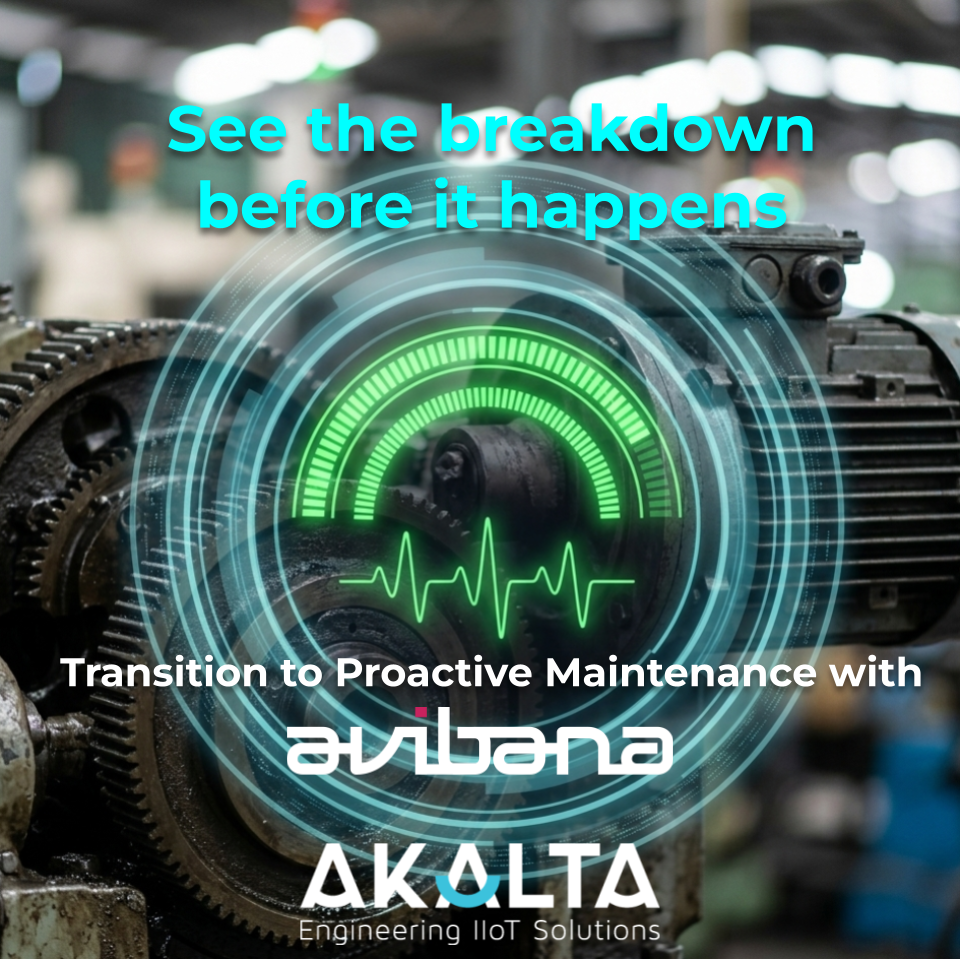
                <p>Imagine you’re driving your car on a long, remote highway. You haven’t checked the oil in months, and you’ve been ignoring that subtle, rhythmic “thumping” sound coming from the front left wheel for weeks. Suddenly, with a loud clunk and a cloud of smoke, the engine seizes. You’re stranded. The repair bill is thousands of dollars, you’ve missed your important meeting, and you have to pay for an emergency tow truck.</p><p>In your personal life, you’d call this a “bad day.” In the world of industrial manufacturing, logistics, or fleet management, we call this Reactive Maintenance. And while it’s the way things have been done for decades, in 2026, it is a strategy that is quietly draining your company’s bank account.</p><p>At Akalta, we work with businesses every day that are tired of being “firefighters.” They are tired of the stress of sudden breakdowns and the chaos of emergency repairs. The good news? Technology has evolved to the point where you no longer have to wait for things to break. We are in the middle of a maintenance evolution, moving from a reactive “hope for the best” mindset to a proactive, data-driven approach.</p><p>In this article, we’ll explore what this evolution looks like, why the old way is so expensive, and how platforms like Avibana act as the bridge to a more profitable, peaceful future.</p><h3 id="the-maintenance-maturity-model-where-do-you-stand">The Maintenance Maturity Model: Where Do You Stand?</h3>
<p>To understand where we’re going, we first have to look at where we are. Most businesses fall into one of three categories when it comes to taking care of their equipment.</p><ol>
<li>Reactive Maintenance (The “Firefighter” Phase)</li>
</ol>
<p>This is the most basic level. The philosophy is simple: Run it until it breaks. On the surface, this seems cheap because you aren’t spending money on technicians while the machine is running. But it is actually the most expensive method. Why? Because you lose control. You don’t choose when the machine breaks—it chooses for you (usually at the worst possible time, like during a peak production shift).</p><ol start="2">
<li>Preventive Maintenance (The “Calendar” Phase)</li>
</ol>
<p>This is a step up. It’s like changing the oil in your car every 5,000 miles, regardless of whether you’ve been driving in a dusty desert or on a clean highway. You perform maintenance tasks based on a schedule.</p><p>While this reduces sudden breakdowns, it creates a new problem: Waste. You often replace parts that still have months of life left in them, and you take machines offline for service when they might be perfectly healthy. You’re spending money “just in case.”</p><ol start="3">
<li>Proactive &amp; Predictive Maintenance (The “Smart” Phase)</li>
</ol>
<p>This is the evolution we are talking about. Instead of guessing or following a generic calendar, you listen to the machine. By using sensors to monitor the actual condition of the equipment—its vibration, its temperature, its power consumption—you only perform maintenance when the data shows it is actually necessary.</p><p>You find the problem while it’s still a tiny “whisper,” long before it becomes a “scream” that shuts down the factory.</p><h3 id="the-hidden-costs-of-reactive-maintenance">The “Hidden” Costs of Reactive Maintenance</h3>
<p>If you ask a manager the cost of a broken conveyor belt, they might say, “It’s $500 for the part and $200 for the labor.” They are wrong. They are only seeing the tip of the iceberg.</p><p>When you wait for a failure, you trigger a chain reaction of hidden costs:</p><ul>
<li>Secondary Damage: A $50 bearing that fails might cause a shaft to bend, which then destroys a $5,000 motor. If you had replaced the bearing proactively, you would have saved the motor.</li>
<li>Expedited Shipping: When a machine is down, every hour costs thousands. You end up paying 10x the normal shipping price to get a part delivered overnight.</li>
<li>Idle Labor: If the production line stops, your workers are still being paid to stand around and wait for the repair.</li>
<li>Lost Opportunity &amp; Reputation: If a breakdown causes a late delivery to your biggest client, you aren’t just losing that sale—you might be losing their trust forever.</li>
</ul>
<p>Reactive maintenance isn’t just a technical choice; it’s a gamble where the house always wins.</p><h3 id="the-enabler-what-is-iot-anyway">The Enabler: What is IoT, anyway?</h3>
<p>You’ve likely heard the term IoT (Internet of Things). It sounds complicated, but for maintenance, it’s actually quite simple.</p><p>Think of IoT as giving your machines a “voice.” In the past, a machine was just a hunk of metal that couldn’t tell you how it felt. With IoT, we attach small, smart sensors to that metal. These sensors are like the “eyes and ears” of your maintenance team.</p><p>They can feel a tiny vibration that a human hand can’t detect. They can sense a 2-degree rise in temperature that indicates a friction problem. These sensors then send that information to a central “brain”—a software platform—where it is turned into a simple status report for you.</p><p>IoT turns “I think the machine is okay” into “I know the machine is okay.”</p><h3 id="avibana-your-247-digital-sentry">Avibana: Your 24/7 Digital Sentry</h3>
<p>This is where Akalta’s Avibana platform comes into play. We designed Avibana specifically to handle the “heavy lifting” of this transition from reactive to proactive.</p><p>For a business owner or a maintenance manager who isn’t a “tech expert,” the idea of analyzing thousands of data points from sensors can be overwhelming. You have a business to run; you don’t want to spend your day looking at complex vibration graphs.</p><p>Avibana solves this through three core strengths:</p><ol>
<li>Continuous Monitoring (The “Check Engine” Light That Never Sleeps)</li>
</ol>
<p>Avibana doesn’t just check your equipment once a week. It monitors it every second of every day. If a pump starts to behave strangely at 3:00 AM on a Sunday, Avibana notices. It’s like having your best technician standing over every machine in your facility, 24/7, with a stethoscope and a thermometer.</p><ol start="2">
<li>Condition Analysis (Turning Noise into Insight)</li>
</ol>
<p>A sensor might tell you that a motor is vibrating at a certain frequency. To most people, that’s just noise. Avibana’s “brain” analyzes that noise. It compares the current vibration to what is “normal” for that specific machine. It filters out the background noise of the factory and focuses only on the patterns that signal trouble.</p><ol start="3">
<li>Clear, Actionable Communication</li>
</ol>
<p>As we discussed in our previous article on visualization, data is useless if you can’t understand it. Avibana doesn’t send you a spreadsheet; it sends you a Status. It uses the universal language of Green (Healthy), Yellow (Warning), and Red (Critical). It tells you exactly which machine needs attention and why, allowing you to schedule a repair during a planned break instead of scrambling during a crisis.</p><h3 id="how-to-transition-a-practical-roadmap">How to Transition: A Practical Roadmap</h3>
<p>If you are currently in “firefighter mode,” you can’t change overnight. The transition to proactive maintenance is a journey. Here is how we help our partners at Akalta make the move:</p><p>Step 1: Identify Your “Critical Assets”</p><p>You don’t need to put sensors on every lightbulb and chair. Start with the “bottleneck” machines—the ones that, if they stop, the whole business stops. This is where you will see the fastest Return on Investment (ROI).</p><p>Step 2: Install the “Senses”</p><p>We help you select the right sensors for those assets. Whether it’s temperature sensors for a cold-chain warehouse or vibration sensors for a CNC machine, we ensure the hardware matches the environment.</p><p>Step 3: Let Avibana Learn</p><p>For the first few weeks, the system learns the “baseline” of your equipment. It learns what a healthy “hum” sounds like for your specific machines.</p><p>Step 4: Shift the Culture</p><p>This is the most important part. Instead of rewarding the “hero” who fixes a broken machine in record time, start rewarding the team that prevents the machine from breaking in the first place. Use Avibana’s reports to prove that the “boring” weeks where nothing broke are actually your most profitable weeks.</p><h3 id="the-peace-of-mind-factor">The Peace of Mind Factor</h3>
<p>Beyond the spreadsheets and the ROI calculations, there is a human element to the maintenance evolution.</p><p>Ask any maintenance manager about their stress levels. They live in a constant state of “waiting for the other shoe to drop.” They can’t enjoy their weekends because they’re worried the phone will ring with news of a major breakdown.</p><p>A proactive approach with Avibana changes the “vibe” of the entire company.</p><ul>
<li>The Maintenance Team is calmer because they can plan their work.</li>
<li>The Production Team is more confident because they know the machines will run.</li>
<li>The Owners are happier because they aren’t seeing thousands of dollars fly out the window for emergency repairs.</li>
</ul>
<h3 id="conclusion-the-future-is-proactive">Conclusion: The Future is Proactive</h3>
<p>Waiting for equipment to break down is no longer a viable business strategy. It’s an expensive relic of a time when we didn’t have the tools to see what was happening inside our machines.</p><p>The maintenance evolution is here. By embracing continuous monitoring and condition analysis through platforms like Avibana, you aren’t just buying software; you’re buying insurance for your production line. You’re buying the ability to see the future and change it before it becomes a disaster.</p><p>In the world of assets, silence isn’t always golden—sometimes it’s just a machine waiting to fail. Let us help you hear what your equipment is trying to tell you.</p>
            ]]>
        </content>
    </entry>
    <entry>
        <title>The 2:00 PM Problem: What Happens When No One is There to Hear the Fall?</title>
        <author>
            <name>Jordi Torné</name>
        </author>
        <link href="https://www.akalta.com/blog/lone-workers-safety/"/>
        <id>https://www.akalta.com/blog/lone-workers-safety/</id>
        <media:content url="https://www.akalta.com/media/posts/32/lonely-worker-safety.png" medium="image" />
            <category term="bambeo"/>
            <category term="avibana"/>

        <updated>2026-02-04T13:00:00+04:00</updated>
            <summary type="html">
                <![CDATA[
                        <img src="https://www.akalta.com/media/posts/32/lonely-worker-safety.png" alt="" />
                    Let’s look at a typical Tuesday for a field technician named Dave. Dave works for a regional water utility company. At 1:00 PM, he drives out to a&hellip;
                ]]>
            </summary>
        <content type="html">
            <![CDATA[
                    <p><img src="https://www.akalta.com/media/posts/32/lonely-worker-safety.png" class="type:primaryImage" alt="" /></p>
                <p>Let’s look at a typical Tuesday for a field technician named Dave. Dave works for a regional water utility company. At 1:00 PM, he drives out to a remote pumping station to check a valve. The site is miles from the main road, tucked at the bottom of a steep valley. Cell service drops to one bar, then zero.</p><p>Dave climbs a short ladder to inspect the overhead pipes. His boot slips on a patch of wet grease. He falls three meters to the concrete floor and is knocked unconscious.</p><p>Under his company’s current safety policy, Dave is supposed to call the office every hour to check in. He missed his 2:00 PM check-in. The dispatcher in the central office noticed the missed call at 2:05 PM and tried to radio him. No response. The dispatcher waited until 2:15 PM, thinking Dave might just be busy or in a dead zone. At 2:20 PM, the dispatcher sent another technician to check on him. The drive took 45 minutes.</p><p>By the time help arrived, it was 3:05 PM. Dave had been laying on the cold concrete floor, unconscious and injured, for over two hours. In an emergency involving a head injury or severe bleeding, those hours determine whether the worker makes a full recovery or doesn’t survive at all.</p><p>This scenario plays out across the country every week. Thousands of people work alone in forests, at remote electrical substations, in massive chemical plants, or in giant automated warehouses at night. We call them “lone workers.” They are the backbone of our infrastructure, but they operate outside the immediate view of their teams.</p><p>Traditional safety policies rely heavily on the worker being conscious and capable of asking for help. If the worker cannot move or speak, the system breaks down.</p><h2 id="moving-past-the-voice-check-in">Moving Past the Voice Check-In</h2>
<p>Voice check-ins are better than nothing, but they are a slow way to detect a crisis. They create a gap of up to an hour where a person could be hurt without anyone knowing.</p><p>Some companies use simple “dead-man” switches on heavy machinery, which shut the machine off if the operator lets go of the handle. This protects the equipment and stops a runaway machine, but it does nothing to alert medical services that the operator has collapsed.</p><p>We need a way to monitor the workers actively without requiring them to do anything. This is where physical sensors and communication networks step in. You have likely heard people talk about the Internet of Things, or IoT. Forget the technical jargon. IoT simply means taking a physical object—like a worker’s ID badge or a clip on their belt—and giving it a way to send small, automated messages without needing a cell phone.</p><p>By equipping a lone worker with a smart wearable device, we can eliminate the dangerous time gaps of traditional check-in policies.</p><h2 id="the-hardware-how-a-badge-knows-you-fell">The Hardware: How a Badge Knows You Fell</h2>
<p>A modern lone worker device is usually no larger than a pager. A worker can wear it on a lanyard, clip it to a hard hat, or strap it to their belt. These devices do not just sit there; they actively measure the physical world.</p><p>The most important sensor inside these badges is an accelerometer. This is the same tiny chip that tells your smartphone to rotate the screen when you turn it sideways. In a safety badge, the accelerometer measures the speed and direction of movement.</p><p>If a worker slips and falls, the badge feels the sudden spike in downward speed, followed by the sharp stop as they hit the ground. A human being falling creates a very specific signature of movement that software can recognize.</p><p>Of course, a worker might just jump off a small ledge or drop their tool belt. To avoid false alarms, the badge usually starts a countdown on the device itself. It might beep or vibrate for 30 seconds. If the worker is fine, they simply press a button to cancel the alert. If they are unconscious or unable to reach the button, the countdown expires, and the badge sends an emergency signal.</p><p>Many of these devices also include a prominent “panic button.” If a worker feels threatened, spots a gas leak, or feels chest pains, they can press the button themselves to call for immediate assistance.</p><h2 id="the-network-sending-a-message-from-nowhere">The Network: Sending a Message from Nowhere</h2>
<p>The biggest challenge with monitoring people in remote locations is the lack of cell service. Dave, in our example earlier, was in a valley with no signal. A standard smartphone would be useless.</p><p>Safety devices use different networks to solve this problem.</p><ul>
<li>Low-Power Radio (LPWAN): These networks use radio waves that can travel miles across flat land or cut through dense concrete walls in a factory. A company can set up a single base station at a remote facility that listens for signals from every worker’s badge within a five-mile radius.</li>
<li>Satellite Links: For workers in the extreme wilderness—like forestry workers or pipeline inspectors—some badges can communicate directly with satellites orbiting the Earth. As long as the worker has a clear view of the sky, they can send an emergency signal from anywhere on the planet.</li>
</ul>
<p>The device does not need to send high-definition video or stream music. It only needs to send a few bytes of data: the worker’s ID number, their GPS coordinates, and a code saying “Emergency: Fall Detected.” Because the messages are so small, they can slip through weak signals that would fail to support a phone call.</p><h2 id="how-akalta-turns-data-into-a-rescue-plan">How Akalta Turns Data Into a Rescue Plan</h2>
<p>Having a badge that can detect a fall and a radio that can send a message is only half of the solution. The other half is the software back at the office that receives the message and tells the dispatcher what to do.</p><p>This is where Akalta’s platforms become the bridge between a sensor and a successful rescue.</p><h3 id="bambeo-finding-the-worker">Bambeo: Finding the Worker</h3>
<p>If Dave falls in a 10,000–square–meter automated warehouse at 3:00 AM, knowing he is “in the warehouse” is not specific enough. It could take his coworkers twenty minutes to search the aisles to find him.</p><p>Akalta’s Bambeo platform is built specifically for high-precision tracking. We map the physical layout of your facility or your geographic region into the system. When a worker’s badge sends an alert, Bambeo shows the dispatcher the worker’s exact location on a digital floor plan or a map.</p><p>If the worker is indoors where GPS does not work, Bambeo can use small radio anchors placed throughout the building to pinpoint the worker’s location to a specific room or hallway. The dispatcher can tell the emergency responders, “Dave is in the northwest corner of Building B, on the third floor, near the ventilation unit.”</p><h3 id="avibana-understanding-the-condition">Avibana: Understanding the Condition</h3>
<p>While Bambeo handles the location, Avibana can handle the data coming from the sensors.</p><p>Avibana can process the information from a worker’s badge to tell the dispatcher more about the situation. For example, it can show whether the alert was triggered by a sudden impact (a fall) or if it was triggered because the worker stood perfectly still for ten minutes (a potential medical emergency like a heart attack).</p><p>By analyzing the data patterns, Avibana helps the dispatcher understand the urgency of the situation before they even arrive on the scene.</p><h2 id="the-cultural-shift-from-heroism-to-prevention">The Cultural Shift: From Heroism to Prevention</h2>
<p>In many industrial companies, there is a culture of rewarding the “hero.” We praise the person who rushes into a crisis and fixes a problem in record time.</p><p>But true safety management aims to make those heroic moments unnecessary.</p><p>Moving to an active, automated tracking system for lone workers requires a shift in how a company thinks about safety. It means admitting that human check-in policies are flawed. It means investing in digital infrastructure before an accident happens, rather than paying the massive legal and medical bills after a tragedy occurs.</p><p>When workers know that someone—or something—is watching out for them in the dark, morale improves. They can focus on doing their jobs well instead of worrying about what will happen if they slip while no one is looking.</p><h2 id="conclusion">Conclusion</h2>
<p>The technology to protect people working alone in dangerous places exists today. We no longer have to accept the risk that a worker might lay injured for hours before anyone notices they are missing.</p><p>By combining wearable sensors that can detect a fall, communication networks that work where cell phones fail, and software platforms like Bambeo and Avibana that can guide rescuers to the exact spot, we can ensure that no worker is truly alone.</p><p>It is time to replace the clipboard and the hourly radio check-in with tools that can actually save a life when seconds count.</p>
            ]]>
        </content>
    </entry>
    <entry>
        <title>The Art of Seeing: Why Clear Data Visualization Is the Heartbeat of Modern Industry</title>
        <author>
            <name>Jordi Torné</name>
        </author>
        <link href="https://www.akalta.com/blog/the-art-of-seeing-data/"/>
        <id>https://www.akalta.com/blog/the-art-of-seeing-data/</id>
        <media:content url="https://www.akalta.com/media/posts/38/the-art-of-seeing.png" medium="image" />
            <category term="industry-4-0"/>
            <category term="bambeo"/>
            <category term="avibana"/>

        <updated>2026-01-13T13:00:00+04:00</updated>
            <summary type="html">
                <![CDATA[
                        <img src="https://www.akalta.com/media/posts/38/the-art-of-seeing.png" alt="" />
                    Imagine you are the captain of a massive cargo ship navigating through a thick, midnight fog. You have the most advanced radar system in the world. It’s collecting&hellip;
                ]]>
            </summary>
        <content type="html">
            <![CDATA[
                    <p><img src="https://www.akalta.com/media/posts/38/the-art-of-seeing.png" class="type:primaryImage" alt="" /></p>
                <p>Imagine you are the captain of a massive cargo ship navigating through a thick, midnight fog. You have the most advanced radar system in the world. It’s collecting millions of data points every second—detecting the salinity of the water, the exact temperature of the engine’s third piston, the wind speed at the top of the mast, and the location of every rogue wave within five miles.</p><p>But there’s a catch: the display screen in the cockpit doesn’t show you a map. Instead, it’s just a scrolling green wall of raw numbers and code, like something out of a 1990s sci-fi movie.</p><p>Technically, you have the data. You have “visibility.” But can you steer the ship? Can you avoid the iceberg appearing two miles out? Probably not. This is the exact situation many industrial and logistics managers find themselves in today. We are living in an era of “Data Overload.” Sensors are cheaper and more powerful than ever. We can track a single pallet across the Atlantic or monitor the microscopic vibration of a turbine. But as we’ve learned at Akalta, data is only as good as its presentation. An incorrect or confusing presentation of sensor data isn’t just a nuisance—it’s a recipe for errors, lost production, and catastrophic failure.</p><p>In this deep dive, we’re going to look at why visualization is the “secret sauce” of the Internet of Things (IoT) and how platforms like Bambeo and Avibana are turning that scrolling wall of numbers into a clear, actionable roadmap for your business.</p><h3 id="the-dangerous-myth-of-more-data">The Dangerous Myth of “More Data”</h3>
<p>For the last decade, the marketing hype around Industry 4.0 told us that “Data is the new oil.” The message was simple: gather as much data as possible, and your problems will vanish.</p><p>They were wrong. Data in its raw form is messy, noisy, and confusing. If I tell you that a motor is vibrating at 42.5 Hz and its temperature is 78°C, does that mean you should stop the production line? Unless you are a vibration analyst with twenty years of experience, you have no idea.</p><p>If your IoT dashboard shows you 500 blinking red lights at once, which one do you click first? When everything is a priority, nothing is a priority. This is known as Cognitive Overload. When the human brain is presented with too much unorganized information, it freezes. Decisions are delayed, or worse, the wrong lever is pulled.</p><p>Clear visualization is the process of distillation. It’s taking that “raw oil” and refining it into high-octane fuel that a human manager can actually use to drive the company forward.</p><h3 id="the-three-pillars-of-industrial-clarity">The Three Pillars of Industrial Clarity</h3>
<p>When we design visualization tools at Akalta, we focus on three core questions that every business owner needs to answer at a glance:</p><ol>
<li>Where is it? (Tracking)</li>
<li>How is it doing? (Monitoring)</li>
<li>What happened to it? (Traceability)</li>
</ol>
<p>If your dashboard makes you dig through three menus to find these answers, the visualization has failed. Let’s look at how we address these specifically through our platforms.</p><h3 id="1-the-where-strategic-tracking-with-bambeo">1. The “Where”: Strategic Tracking with Bambeo</h3>
<p>In logistics and asset management, “Where?” is the billion-dollar question. But “where” is more complex than a dot on a map.</p><p>If you are managing a fleet of 1,000 returnable containers, a map with 1,000 dots is just a cluttered mess. You can’t see the forest for the trees. This is where Bambeo excels. Instead of just showing location, Bambeo uses visualization to show status through location.</p><ul>
<li>Geofencing with Clarity: Imagine your screen shows a green zone (the warehouse) and a red zone (the exit). Instead of seeing coordinates, you see a simple notification: “Asset #402 has left the Geofence.” The visualization focuses on the event, not the math.</li>
<li>Heatmaps: Instead of individual dots, Bambeo can show you a “Heatmap” of your warehouse. At a glance, you see a glowing orange blob in the northwest corner. That tells you that your inventory is bottlenecking in that specific area. You didn’t need to count boxes; you just needed to see the “heat.”</li>
<li>Inventory Scannability: Bambeo turns inventory into a visual grid. If a square is green, it’s full. If it’s gray, it’s empty. This allows a floor manager to look at a tablet for two seconds and know exactly where the next shipment should be placed.</li>
</ul>
<p>The result? Reduced search time. In many warehouses, workers spend up to 20% of their time just looking for things. Clear visualization gives that time back.</p><h3 id="2-the-how-condition-monitoring-with-avibana">2. The “How”: Condition Monitoring with Avibana</h3>
<p>Tracking tells you where an asset is; monitoring tells you if it’s “healthy.” This is the realm of Avibana.</p><p>Monitoring is where bad visualization is most dangerous. If a cooling system in a pharmaceutical warehouse fails, you have a very small window of time to save millions of dollars in vaccines. If the dashboard is confusing, that window slams shut.</p><ul>
<li>The “Traffic Light” System: We are big believers in the power of Red, Yellow, and Green. It’s the most universally understood visual language on Earth. Avibana translates complex sensor thresholds—like pressure, humidity, and vibration—into these colors. You don’t need to know the physics; you just need to know that if the “Compressor B” tile turns yellow, it’s time to schedule a technician.</li>
<li>Trendlines vs. Snapshots: A single data point (e.g., “The temperature is 20°C”) is a snapshot. It doesn’t tell you the story. But a visual Trendline shows you that the temperature was 15°C three hours ago and has been steadily climbing. The visualization allows you to predict the future. You see the slope of the line and realize, “If I don’t act now, we’ll hit the danger zone by 5:00 PM.”</li>
<li>Contextual Overlays: Avibana doesn’t just show a graph; it shows a graph overlaid with your business rules. The “danger zone” is shaded in red right on the chart. This removes all guesswork.</li>
</ul>
<h3 id="3-the-what-happened-traceability-and-the-digital-paper-trail">3. The “What Happened”: Traceability and the Digital Paper Trail</h3>
<p>Traceability is about looking backward to improve the future. In industries like food or high-end manufacturing, you need to prove exactly what happened to a product from the moment it was a raw material to the moment it reached the customer.</p><p>Confusing traceability data leads to failed audits and massive fines. Akalta’s platforms simplify this by creating a Visual Timeline.</p><p>Think of it like a social media feed for your assets. Instead of a spreadsheet of logs, you see a vertical line:</p><ul>
<li>8:00 AM: Asset received (Green Icon)</li>
<li>10:00 AM: Entered sterilization chamber (Purple Icon)</li>
<li>10:15 AM: Temperature spike detected (Small Yellow Warning)</li>
<li>12:00 PM: Quality check passed (Blue Checkmark)</li>
</ul>
<p>By making the history visual, anyone—from a floor worker to a government auditor—can understand the story of that asset in seconds.</p><h3 id="the-hidden-cost-of-bad-design">The Hidden Cost of “Bad” Design</h3>
<p>What happens when visualization is ignored? It’s not just “ugly” software; it’s a financial drain.</p><ol>
<li>The “False Alarm” Fatigue: If a system is poorly visualized, it often cries wolf. If a sensor is too sensitive and the dashboard flashes red for every tiny vibration, workers start to ignore it. Eventually, a real crisis happens, and nobody looks at the screen because they assume it’s just another “glitch.”</li>
<li>Training Costs: Complex, confusing systems require weeks of training. Intuitive, well-visualized systems (like Akalta’s) can be learned in an afternoon. If your turnover is high, this difference is worth thousands of dollars per employee.</li>
<li>Lost Production: When a machine breaks, every minute of downtime costs money. If the technician spends 15 minutes just trying to navigate a confusing software interface to find the fault code, that’s 15 minutes of lost revenue. Clear visualization points the finger exactly where the problem is.</li>
</ol>
<h3 id="how-akalta-empowers-the-non-tech-expert">How Akalta Empowers the Non-Tech Expert</h3>
<p>At Akalta, our “Expertise” isn’t just in the sensors; it’s in the human-machine interface. We know that the person using our software is often a busy manager with ten other things on their mind. They aren’t “IoT experts,” and they shouldn’t have to be.</p><p>We build our dashboards with User-Centric Design:</p><ul>
<li>Customizable Views: We don’t believe in a one-size-fits-all dashboard. A CEO wants to see a high-level summary of “Plant Efficiency.” A maintenance tech wants to see “Bearing Temperature on Motor 4.” Akalta allows you to tailor the visualization so you only see what matters to you.</li>
<li>Mobile-First Clarity: Assets move. Managers move. Our visualizations are designed to be just as clear on a smartphone in the middle of a loading dock as they are on a 50-inch monitor in a control room.</li>
<li>Actionable Icons: We use symbols that mirror the real world. A forklift icon for a forklift. A thermometer for temperature. It sounds simple, but reducing the “mental translation” time makes the whole operation faster.</li>
</ul>
<h3 id="conclusion-seeing-is-believing-and-profiting">Conclusion: Seeing is Believing (and Profiting)</h3>
<p>We are moving toward a world where every physical object will be connected to the digital world. This “Digital Twin” of our businesses holds the key to incredible efficiency and sustainability.</p><p>But we must remember: The goal of IoT is not to collect data. The goal of IoT is to make better decisions.</p><p>You cannot make a better decision if you cannot see the truth clearly. Whether you are using Bambeo to ensure your containers never go missing again or Avibana to make sure your factory never stops humming, the power is in the presentation.</p><p>Don’t let your business fly through the fog with a broken radar. It’s time to turn on the lights.</p>
            ]]>
        </content>
    </entry>
    <entry>
        <title>The Fast Track to a Smarter Portfolio: How White-Label Solutions Let You Own the Technology Without the Headache</title>
        <author>
            <name>Jordi Torné</name>
        </author>
        <link href="https://www.akalta.com/blog/white-label-solution/"/>
        <id>https://www.akalta.com/blog/white-label-solution/</id>
        <media:content url="https://www.akalta.com/media/posts/45/whitelabel.png" medium="image" />
            <category term="predictive-maintenance"/>
            <category term="industry-4-0"/>
            <category term="bambeo"/>

        <updated>2025-12-05T13:00:00+04:00</updated>
            <summary type="html">
                <![CDATA[
                        <img src="https://www.akalta.com/media/posts/45/whitelabel.png" alt="" />
                    In today’s hyper-connected industrial and logistics landscape, customer expectations have shifted dramatically. Five years ago, delivering a shipment on time was enough. Today, your customers want to know&hellip;
                ]]>
            </summary>
        <content type="html">
            <![CDATA[
                    <p><img src="https://www.akalta.com/media/posts/45/whitelabel.png" class="type:primaryImage" alt="" /></p>
                <p>In today’s hyper-connected industrial and logistics landscape, customer expectations have shifted dramatically. Five years ago, delivering a shipment on time was enough. Today, your customers want to know where that shipment is in real-time, what temperature it’s being stored at, and whether it experienced any shocks during transit.</p><p>If you are a logistics provider, an equipment manufacturer, or an industrial services company, you are likely feeling this pressure. You hear terms like the “Internet of Things” (IoT), “smart asset tracking,” and “predictive maintenance” tossed around in every client meeting.</p><p>Your customers are asking for these “smart” services. If you can’t provide them, they will find someone who can.</p><p>This creates a significant dilemma for businesses that aren’t traditionally software companies. You know you need to expand your service portfolio to include digital solutions, and fast. But how? Do you hire a team of developers and spend two years trying to build your own platform from scratch? Or is there a smarter, faster way to give your customers what they want under your own brand?</p><p>As an expert in IoT product marketing, I can tell you that the smartest route to innovation is often not invention, but integration. This is where the power of white-label solutions comes into play.</p><h3 id="the-build-vs-buy-dilemma-in-the-age-of-iot">The “Build vs. Buy” Dilemma in the Age of IoT</h3>
<p>Before diving into the solution, let’s appreciate the problem.</p><p>Many companies make the initial mistake of thinking, “We need an app to track our containers; let’s just hire a couple of developers and build it.”</p><p>This is the industrial equivalent of seeing an iceberg and only worrying about the tip. An effective IoT solution—whether for tracking shipments across oceans or monitoring the health of factory machinery—is incredibly complex beneath the surface.</p><p>A successful “smart” platform requires sophisticated hardware sensors, robust global connectivity (cellular, satellite, Bluetooth), secure cloud storage, complex data processing engines, reliable APIs, and intuitive user interfaces on web and mobile. Furthermore, it all needs to be cybersecurity-hardened to protect sensitive data.</p><p>Building this in-house requires a massive upfront capital investment, a specialized team of engineers (which are hard to find and expensive to keep), and an acceptance of high risk. According to industry analysts, nearly 75% of self-initiated IoT projects fail to scale because companies underestimate this complexity. They run out of money, time, or patience long before they have a sellable product.</p><p>If your core competency is moving freight efficiently, do you really want to pivot to becoming a software development firm? Probably not.</p><h3 id="what-is-a-white-label-solution">What is a White-Label Solution?</h3>
<p>If building it yourself is too slow and risky, what is the alternative?</p><p>Imagine going to a high-end supermarket. You might see their “own-brand” premium coffee. The supermarket didn’t grow the beans or build the roasting factory. They sourced a high-quality product from an expert producer and packaged it under their own trusted brand name.</p><p>A white-label IoT solution works on the same principle, but for technology.</p><p>A specialized tech company (like Akalta) invests years of R&amp;D into building a robust, tested, and secure software platform for things like asset tracking or equipment monitoring. They build the engine, the chassis, and the dashboard.</p><p>You, as the service provider, then “lease” this technology. You apply your company’s logo, your color scheme, and your domain name to it. You sell it to your end customers as your own proprietary solution, at your own price points.</p><p>Your customer logs into a portal that looks and feels exactly like your brand, completely unaware that the complex machinery humming in the background is provided by a third party.</p><h3 id="the-strategic-benefits-of-going-white-label">The Strategic Benefits of Going White-Label</h3>
<p>Choosing a white-label route isn’t just about avoiding technical headaches; it’s a strategic business move that accelerates growth. Here are the key benefits for companies looking to expand their portfolios quickly.</p><ol>
<li>Speed is the New Currency: Instant Market Entry</li>
</ol>
<p>In the current market, being first often matters more than being perfectly unique. Developing an in-house platform can take 18 to 24 months before you have a viable product to show clients. In that time, your competitors may have already captured the market.</p><p>A white-label solution is essentially “turnkey.” Because the technology is already built and tested, you can go from deciding you need a smart solution to actually selling it to your customers in a matter of weeks. You flip a switch, apply your branding, and you are instantly a player in the digital space.</p><ol start="2">
<li>Drastically Reduced Costs and Risk</li>
</ol>
<p>The capital expenditure (CapEx) required to build a software platform is immense. You are paying salaries, server costs, hardware prototyping fees, and regulatory compliance costs before you have earned a single dollar in revenue from the product.</p><p>White-labeling shifts this model almost entirely to Operational Expenditure (OpEx). You typically pay a predictable subscription or licensing fee based on usage. The massive financial risk of R&amp;D failure is removed from your balance sheet and absorbed by the technology provider. You know exactly what your costs are, making pricing and ROI calculations much simpler.</p><ol start="3">
<li>Focus on Your Core Competencies</li>
</ol>
<p>If you are a logistics company, your expertise is in routes, regulations, warehouses, and client relationships. Your value proposition is not writing Python code or managing AWS servers.</p><p>By adopting a white-label solution, you free your resources to focus on what you do best: selling the solution and serving your clients. You don’t need to distract your management team with software development stand-ups. You let the tech experts handle the tech, while you handle the business expansion.</p><ol start="4">
<li>Leveraging Proven, Mature Technology</li>
</ol>
<p>When you build your own v1.0 product, your first customers are essentially your beta testers. They will find the bugs, the crashes, and the security holes. This can damage the very brand reputation you are trying to enhance.</p><p>A reputable white-label provider offers a mature platform that has already been battle-tested across thousands of deployments. You are buying reliability from day one. The platform already handles scale, security patches, and feature updates, ensuring your customers have a smooth experience that reflects well on your brand.</p><h3 id="akalta-your-engine-for-rapid-portfolio-expansion">Akalta: Your Engine for Rapid Portfolio Expansion</h3>
<p>This is where Akalta steps in as the ideal partner for businesses looking to bridge the gap between their current services and the digital demands of their customers.</p><p>Akalta understands that you don’t want to buy “technology”; you want to buy a new revenue stream and a competitive advantage. Akalta has developed sophisticated platforms designed specifically for the white-label model, ready to be adapted to your needs.</p><p>Akalta offers distinct platforms that cater to the most pressing needs in logistics and industry today:</p><ol>
<li>Bambeo: The Asset Tracking and Management Engine</li>
</ol>
<p>If your clients are asking, “Where is my shipment?” or “Where are my returnable containers?”, Bambeo is the answer you can brand as your own.</p><p>It’s a comprehensive platform that visualizes the location and status of assets in real-time. It handles geofencing (alerts when items enter or leave an area), historical route playback, and inventory analytics. You can offer your clients a branded portal where they log in and see their assets moving on a map, powered by your company.</p><ol start="2">
<li>Avibana: The Condition Monitoring and Predictive Maintenance Engine</li>
</ol>
<p>If you deal with sensitive cargo (like pharmaceuticals or food) or lease out expensive industrial machinery, location isn’t enough. You need to know the condition.</p><p>Avibana is designed to ingest data from sensors measuring temperature, humidity, shock, vibration, and operational metrics. It turns this data into simple, actionable dashboards. You can offer a service to your clients that alerts them before a machine fails, or provides proof that a cold-chain shipment never exceeded the safe temperature range.</p><p>The Akalta White-Label Advantage:</p><p>Akalta doesn’t just hand you login credentials and walk away. Their solutions are designed for deep rebranding. We aren’t just talking about slapping a logo in the corner. You can customize dashboards, configure reports, and set up user roles that align with how you sell your services.</p><p>Furthermore, as Akalta continues to innovate—adding new features, integrating new sensor types, and improving AI analytics—your branded platform automatically gets better, without you having to spend a dime on R&amp;D.</p><h3 id="conclusion-smart-business-means-smart-partnerships">Conclusion: Smart Business Means Smart Partnerships</h3>
<p>The demand for digital visibility in logistics and industry is not a passing trend; it is the new baseline requirement for doing business.</p><p>The companies that win in the next decade will not necessarily be the ones that build the best technology from scratch. They will be the ones who recognize the need for speed, who understand their own strengths, and who are smart enough to partner for the rest.</p><p>A white-label solution is not a shortcut that compromises quality. It is a strategic accelerator. It allows you to stand in front of your biggest client next month and say, “Yes, we have a digital platform for that, and it’s fully integrated with our service.”</p><p>By leveraging Akalta’s proven platforms like Bambeo and Avibana under your own brand, you stop worrying about how to build the future of your company and start focusing on selling it.</p>
            ]]>
        </content>
    </entry>
</feed>